The Skirmish at Yellow Bottom
Earliest USCT Engagement on Virginia Soil
In January 1864, General Ambrose E. Burnside, with the permission of Secretary of War Edwin Stanton, formed a division of “colored troops.” The 4th Division of the IX Corps infantry would be all black troops, commanded by white officers under the leadership of General Edward Ferrero.
When the 4th Division of the IX Corps left Camp Stanton in Annapolis, Maryland they paraded in front of President Abraham Lincoln and General Burnside before heading off to Virginia. At that time the division was an independent army Corps. They were assigned to guard the railroad from Manassas to Rappahannock Station.

“Saw me real Black soldiers. Hear the Colored Corps is guarding RR (railroad) relieving the others.”
On May 5, 1864, members of the 4th Division, 9th Corps, under the command of Union Brigadier General Edward Ferrero, departed duty along the Orange and Alexandria Railroad and crossed the Rappahannock River at Kelly’s Ford into Culpeper, Virginia.
“Saw me real Black soldiers. Hear the Colored Corps is guarding RR (railroad) relieving the others.”
~ Gilbert Thompson, Engineer, Army of the Potomac, April 30, 1864

“Crossed the Rappahannock into Culpeper County at 2 p.m. on 5 May.”
The Corps bivouacked overnight near Mountain Run and departed early the next morning after receiving orders to proceed to the Wilderness. They arrived on the morning of May 6
“Crossed the Rappahannock into Culpeper County at 2 p.m. on 5 May.” General Edward Ferrero, Commander of the 4th Division, Official Records
“Crossed the Rapidan River at Germanna Ford on the morning of 6 May.”
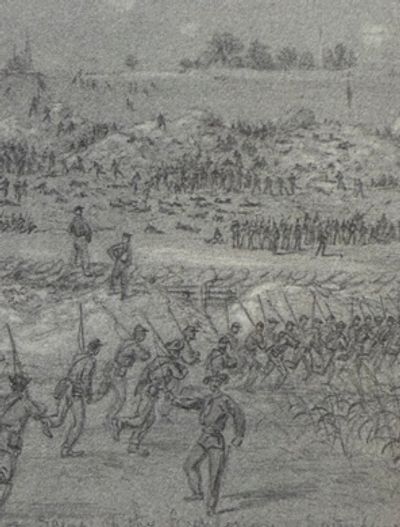
After arriving at Germanna, the division commenced maneuvering in Orange and Spotsylvania Counties. However, a number of soldiers were still left bringing up the rear. On the morning of May 9, 1864, soldiers of the Confederate 13th Virginia Cavalry, under the command of Brigadier General John R. Chambliss, passed through Stevensburg, Virginia, enroute to Fredericksburg. As they passed near Madden’s Tavern, they came upon members of the 4th Division, 9th Corps encamped in the hollow off Yellow Bottom Road.
“Crossed the Rapidan River at Germanna Ford on the morning of 6 May.” General Edward Ferrero, Commander of the 4th Division, Official Records
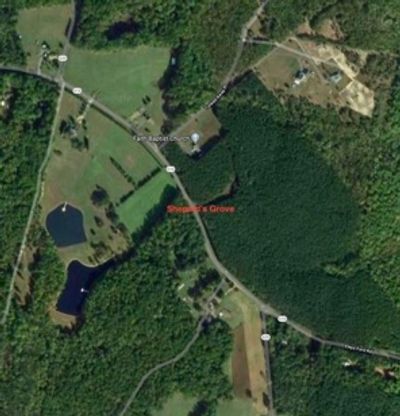
In keeping with a proclamation issued in 1862 by Confederate President Jefferson Davis, ordering that all Black soldiers captured in arms be killed or re-enslaved, the 13th Virginia Cavalry charged upon the Union camp.
The USCTs, after being initially surprised, returned fire and eventually repelled the onslaught, though not without suffering casualties.
The events of that day in eastern Culpeper County marked one of the earliest engagements between United States Colored Troops (USCTs) and the Confederate Army on Virginia soil.
The men of the 4th Division, 9th Corps would later join the Army of the Potomac on May 24, 1864, and fight at the Battle of the Crater. Many would also be present at the surrender of Robert E. Lee at Appomattox, Virginia.